
Complete Guide to Commercial Cleaning Products: What Works & Why
Complete Guide to Commercial Cleaning Products: What Works & Why
Choosing the right cleaning products can feel overwhelming. Walk into any commercial cleaning supplier and you’ll find hundreds of options all promising superior cleaning, faster results, and better value. But most commercial cleaning operations only need a core set of products chosen strategically.
This guide covers what works, why it works, and how to build a product arsenal that delivers results without waste or unnecessary complexity.
Why Product Selection Matters
The wrong products waste money. The right products save it.
Overbuying: Many facility managers stock every product imaginable “just in case.” Result: products expire, money sits on shelves, and you end up replacing stock you never used.
Underbuying: Using cheap, ineffective products means your team scrubs harder, uses more of the product, takes longer, and delivers mediocre results. Clients notice.
Safety: Using incompatible products (bleach + ammonia) creates hazards. Using the wrong product on a surface damages it. Poor product selection creates liability.
Efficiency: The right product for the right job means faster cleaning, better results, and happier staff. Your team works smarter, not harder.
The Core Products Every Cleaning Operation Needs
Most commercial cleaning can be done with 5-7 core products. Specialty cleaning (windows, carpets, grout) adds 2-3 more. Here’s what you actually need.
1. All-Purpose Cleaner (Dilutable Concentrate)
What it does: Cleans general surfaces desks, tables, walls, most hard surfaces.
Why dilutable concentrate: Costs less per use, less packaging waste, lasts longer.
What to look for:
– Effective on dirt and grime
– Safe on multiple surface types
– Dilutes to recommended ratio (usually 1:10 or 1:20)
– Non-streaking formula
Cost: $15-30 per litre concentrate (makes 10-20 litres when diluted)
Pro tip: Buy concentrate, not pre-diluted spray bottles. You’ll save 60-70% on cost.
2. Disinfectant Spray (Hospital-Grade)
What it does: Kills germs and bacteria on high-touch surfaces.
Why you need it: High-touch surfaces (door handles, light switches, railings) are the germiest. Disinfection is especially critical in medical facilities, schools, and offices.
What to look for:
– Kills 99.9% of bacteria and viruses
– Contact time clearly stated (usually 30 seconds to 1 minute)
– EPA-approved or meets Australian standards
– Safe on common surfaces (stainless steel, plastic, etc.)
Cost: $20-40 per litre
Pro tip: Let disinfectant sit for the full contact time before wiping. Wiping too early reduces effectiveness.
3. Glass & Window Cleaner
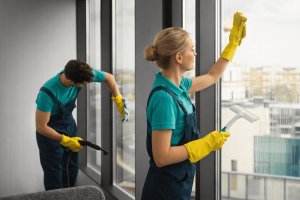
What it does: Cleans glass, mirrors, and windows streak-free.
Why you need it: Regular all-purpose cleaner leaves streaks on glass. Glass cleaner contains alcohol or ammonia that evaporates cleanly.
What to look for:
– Streak-free formula
– Safe on tinted windows (some are not)
– Good for interior and exterior use
Cost: $10-20 per litre
Pro tip: Use with microfibre cloths and wipe top-to-bottom for best results.
4. Toilet & Urinal Cleaner (Acidic)
What it does: Removes limescale, rust stains, and discolouration from toilets and urinals.
Why you need it: Regular all-purpose cleaner doesn’t cut through mineral deposits. Acidic cleaner breaks them down.
What to look for:
– Effective on limescale and hard water stains
– Safe for ceramic and porcelain
– Includes a brush for scrubbing
– Safety data sheet clearly states dilution and contact time
Cost: $15-35 per litre
Important: Never mix with bleach or ammonia-based products.
5. Floor Cleaner (pH Neutral)
What it does: Cleans tile, laminate, and vinyl floors without leaving residue.
Why pH neutral: Alkaline cleaners leave streaks and residue. Acidic cleaners damage some floor types. pH neutral cleans effectively without damage.
What to look for:
– Works on your specific floor type (tile, laminate, vinyl)
– Non-slip formula (important for safety)
– Doesn’t require rinsing
– Dilutes properly (no white haze or residue)
Cost: $15-25 per litre
Pro tip: Always test on a small inconspicuous area first, especially on delicate surfaces.
6. Microfibre Cloths (Not a Product, But Essential)
We covered this in detail in our microfibre cloths post, but: quality microfibre cloths are non-negotiable. They’re not optional.
– Capture more dirt with less chemical
– Reduce product waste by 20-30%
– Last 300+ washes if cared for properly
– Cost $5-10 per cloth but outlast 100+ cheap cloths
Specialty Products (Add As Needed)
Once your core 6 are solid, add specialty products for specific jobs:
Grout & Tile Cleaner
For stubborn grout stains and tile buildup.
– Cost: $15-30 per litre
– Use: 1-2 times per month on high-traffic tiles
Carpet & Upholstery Cleaner
For spot-cleaning carpet stains or using with extraction equipment.
– Cost: $20-40 per litre
– Use: As needed for spot cleaning
Degrease (Kitchen/Heavy-Duty)
For kitchens, factory floors, or heavy grease buildup.
– Cost: $15-35 per litre
– Use: Weekly in kitchens, monthly in offices
Window/Glass Sealer (Optional)
Makes future cleaning easier by creating a protective coating.
– Cost: $30-60 per litre
– Use: Quarterly or semi-annually on high-use windows
How to Calculate Product Costs
Example: You clean 5 office buildings weekly. Each building uses:
– 1 litre of diluted all-purpose cleaner per visit
– 500ml of disinfectant per visit
– 250ml of glass cleaner per visit
Monthly cost (per building, 4 visits):
– All-purpose: 4 litres ÷ 20 (dilution ratio) = 0.2 litres concentrate = $4
– Disinfectant: 2 litres = $8
– Glass cleaner: 1 litre = $4
– **Total per building: $16/month**
Multiply by 5 buildings = $80/month in chemicals
When you bid cleaning contracts, factor this in. A $500/month office clean should include roughly $15-20 in product costs (3-4% of revenue). *Just an example for the sake of this guide.
Common Mistakes in Product Selection
Mistake #1: Buying Everything in Spray Bottles
Pre-made spray bottles are convenient but expensive. They cost 3-5x more than concentrate.
Solution: Buy concentrate in bulk, dilute into spray bottles yourself.
Mistake #2: Overbuying “Just in Case”
Buying 10 litres of specialty product “just in case” means it sits on shelves, expires, and gets wasted.
Solution: Stock core products in quantity, specialty products only as needed. Reorder more frequently in smaller quantities.
Mistake #3: Using the Wrong Product on a Surface
Using acidic toilet cleaner on marble (it etches it). Using bleach on stainless steel (it pits). Using ammonia-based cleaner on some coatings (it damages them).
Solution: Test first on inconspicuous areas. Read the product label. Know your surfaces.
Mistake #4: Mixing Products
Bleach + ammonia = toxic chloramine gas. Bleach + acid = toxic chlorine gas.
Solution: Use one product at a time. Rinse thoroughly between different product types.
Mistake #5: Not Diluting Properly
Over-dilution wastes the product’s effectiveness. Under-dilution wastes money and can damage surfaces.
Solution: Follow manufacturer instructions exactly. Use a measuring cup, not eyeballing. Label diluted solutions with ratio and date.
Storage & Shelf Life
Products don’t last forever. Proper storage extends shelf life and keeps them effective.
Storage Best Practices:
– Cool, dry, well-ventilated area (not in direct sun)
– Original containers only
– Away from chemicals that shouldn’t mix
– Away from food or break areas
– Check expiration dates quarterly
Shelf Life Expectations:
– Most concentrates: 2-3 years unopened
– Once opened/diluted: 6-12 months
– Some speciality products: shorter (check labels)
Budget Breakdown: Monthly Chemical Costs
For a typical commercial cleaning operation:
Small operation (1-2 sites): $100-200/month
Medium operation (5-10 sites): $400-800/month
Large operation (20+ sites): $1,500-3,000/month
This assumes:
– Bulk purchasing (lower cost)
– Concentrate products (not spray bottles)
– Core products only (not luxury specialties)
– Efficient use (no waste or spills)
Sourcing Products: Where to Buy
Commercial Cleaning Suppliers (Best option for bulk)
– Better pricing on concentrate
– Expert advice
– Local pickup or delivery
– Examples: Bunnings Trade, CleanStuff (Australia-wide) or our preference www.cleaningsupplieswa.com.au
Online Wholesalers
– Competitive pricing
– Good for comparing
– Shipping costs factor in
– Reorder easily
Local Supermarkets/Hardware Stores
– Convenient for emergency restocks
– More expensive
– Limited range
– Use only when necessary
Final Recommendation: Start Simple
If you’re new to commercial cleaning or want to streamline your product range:
Start with these 5:
1. All-purpose concentrate
2. Disinfectant spray
3. Glass cleaner
4. Toilet cleaner
5. Floor cleaner
Add specialty products only when a specific job demands it. Most commercial cleaning can be done with these 5 products and quality microfibre cloths.
Master these, dial in your dilution ratios and techniques, and you’ll deliver professional results while keeping costs low.
About Brightside Cleaning
At Brightside Commercial Cleaning, we’ve optimised our product selection over 20 years of cleaning commercial spaces. We use proven, effective products that deliver results and keep our teams safe. If you’d like to discuss product standards for your facility or need a cleaning solution, contact us for a consultation.